Detector Physics (DET)
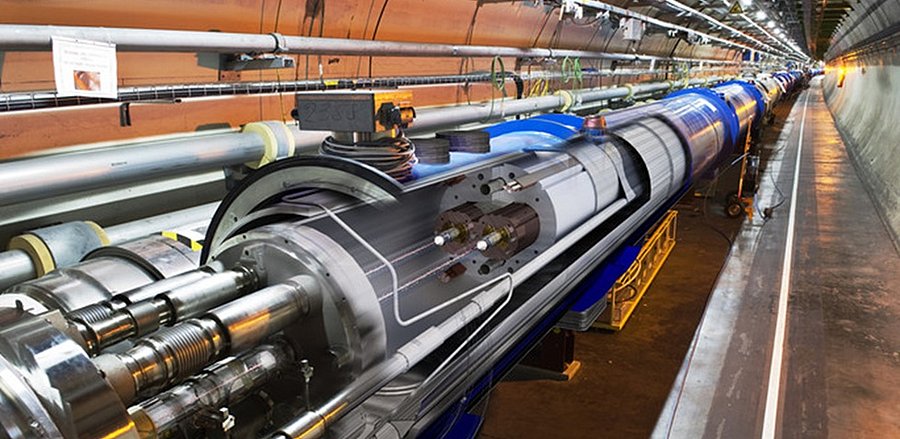
Are you fascinated by particle accelerators, radiation, and the cutting-edge detectors that power modern experiments in particle and astroparticle physics? In the Detector Physics specialization, you’ll explore beam dynamics, radiation–matter interactions, and hands-on detector techniques—combining theory, simulation, and real experimental data. If you want to understand how today’s largest physics experiments work from the inside out, this specialization is exactly for you!
Description of the Specialization
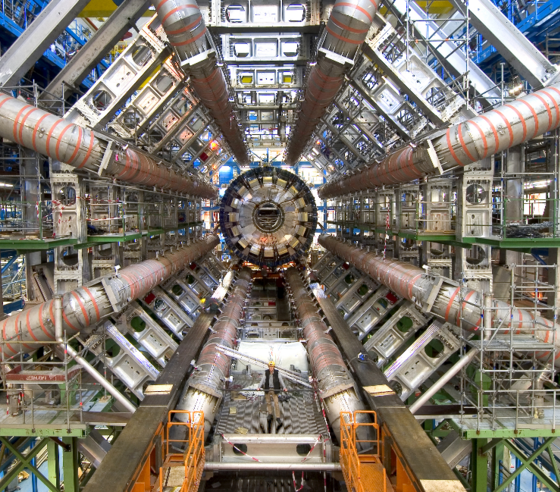
The students master the physical principles and the components of particle accelerators as well as their functions. They can perform simple computations of linear beam optics. The students know how to describe the interaction of different forms of particle radiation with matter and they are able to connect this knowledge to techniques, methods and components of modern detectors and experiments in particle and astroparticle physics. The students will be enabled to discuss the advantages and disadvantages of different detector types. They can explain the use and the interplay of detectors in large experiments. The students know about basic laboratory techniques of detecting particles, perform simple experiments and analyse recorded data. The working group for the Experimental Elementary Particle Physics closely cooperates with the European Organisation for Nuclear Research in Geneva, Switzerland (CERN), ATLAS experiment at CERN and the North Rhine-Westphalian Competence Network for High-Performance Computing (HPC.NRW).
Module 1. Particle Detector Project (PDP) – mandatory
Workload: 8 ECTS (240 hours, 1 semester)
Final assessment: oral or written exam, not restricted in attempts
Components:
• Project Introduction (PDP-a)
• Transfer Task (PDP-b)
• Final Presentation (PDP-c)
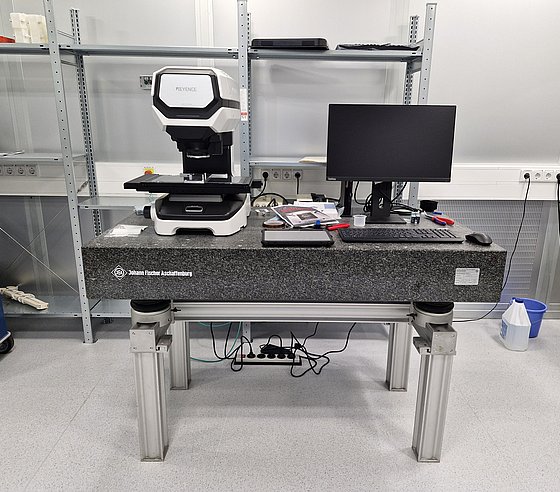
The students know how to apply techniques of particle detection and reconstruction to particular detector setups. They are able to simulate the response of particle detectors to incident particles. They know how to operate and control detectors, record data in laboratory setups and analyse these data. They are able to use modern software tools, including parallel computing techniques, in performing to above mentioned tasks. The students obtain hands-on experience in state-of-the-art experimental equipment (tunneling microscopy). The students can choose their detector project from the following fields: Implementation of multivariate techniques for track reconstruction in field programmable gate arrays, simulation and optimisation of calorimetric measurements with the GEANT package, simulation of air showers with the CORSIKA package, simulation of the propagation of charged particles and their interactions in the universe, simulation of radiointerferometric measurements in air showers, and operation and calibration of large particle detectors using modern distributed computing techniques and web architectures, scanning probe techniques, x-ray probes.
Module 2. Detector Physics (DET) – mandatory
Workload: 8 ECTS (240 hours, 1 semester)
Final assessment: 30-minutes oral exam, not restricted in attempts
Components:
• Lab course on Detector Physics (DET-a)
Choice of two of the following experiments: silicon strip detector, Compton scattering, Rutherford scattering or muon lifetime, reciprocal space probes in condensed matter physics, spectroscopic imaging.
• Detector Physics (TPDP-a)
Linear and circular accelerators. Betatron and synchrotron oscillations. Linear beam dynamics. Interaction of particles with matter, shower, momentum- and track- measurement, track detectors (gas chambers), semi-conductor detectors, time measurement, energy measurement (calorimeter), particle identification, experiments of particle and astro-particle physics, instrumentation, data acquisition. Upload of protocols of two experiments in sufficient quality is needed to complete.
• Exercises Detector Physics (TPDP-b)
Contents of the lecture are practiced in dedicated exercises. Upload of at least 10 solutions of the exercises corresponding to at least 50% of the points is required to complete.
At least 24 ECTS credits (or 13% of completed Bachelor´s degree) in the following fields: Newton’s laws, circular motion, harmonic oscillator, forced oscillations, energy and momentum conservation, elastic scattering. Basic relations of relativistic kinematics. Coloumb’s law of electric forces, Lorentz force, law of induction, propagation of planar electromagnetic waves in vacuum and matter. Quantisation of energy levels in atoms, excitations of atoms, photoelectric effect, description of microscopic particles with wave functions, Compton scattering. Radioactive decays.
The registration for the DET final module exam requires the successfully completed DET-a and TPDP-b components.
You can check yourself, if you can study on this specialization by completing the:
Graduates of this specialization are qualified for careers in research institutions, large-scale international laboratories, high-tech industry, and companies developing accelerator and detector technologies. They find employment in particle and astroparticle physics research centres, medical technology (e.g., radiation therapy and imaging), nuclear technology, and advanced instrumentation development.
Typical positions include Accelerator Physicist, Beam Dynamics Engineer, Detector Physicist, Research Scientist, Data Analyst in experimental physics, Medical Physics Engineer, and R&D Engineer for radiation technologies. Alumni work on accelerator operation and optimization, detector development, radiation–matter interaction analysis, experimental data evaluation, and the design of complex measurement systems.
The specialization also provides excellent preparation for doctoral studies and careers in experimental physics, accelerator science, and related high-technology research fields.
Please, see the Master Theses examples by the following link:
https://hepweb.physik.uni-wuppertal.de/de/bachelor-und-masterthesis/verfuegbare-bachelorthemen/
Gallery
Contacts
Person responsible for the specialization:
Prof. Dr. Wolfgang Wagner, +49 202 439 2861, wagner[at]uni-wuppertal.de
Lecturers:
- Prof. Dr. Wolfgang Wagner (wagner[at]uni-wuppertal.de) – Detector Physics
- Prof. Dr. Christian Zeitnitz (zeitnitz[at]physik.uni-wuppertal.de) – Detector Physics
- Prof. Dr. Christian Hemker-Heß (c.hess[at]uni-wuppertal.de) – Lab Course on Detector Physics
- Dr. Christian Pauly (pauly[at]physik.uni-wuppertal.de) – Detector Physics
- Dr. Julian Rautenberg (julian.rautenberg[at]uni-wuppertal.de) – Detector Physics
Links:
Website of the working group for the Experimental Elementary Particle Physics
Personal website of Professor Wagner
Last modified: 25.03.2026