Peter Ngure
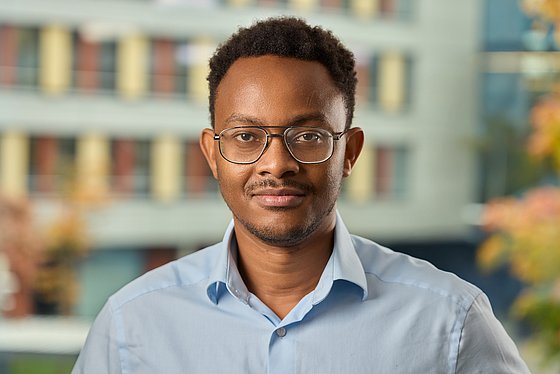
Coming from Nairobi, Kenya, where I completed my Bachelor of Science in Electrical and Electronics Engineering at the Technical University of Kenya (then a constituent college of the University of Nairobi), I always had a deep curiosity for technology and its applications in solving real‑world problems. After graduating, I worked in the industrial automation sector as a Technical Sales Engineer, most recently at KHS East Africa, the regional service and sales centre for KHS GmbH. Although I enjoyed the practical and customer‑focused nature of my work, I always knew I wanted to specialize further — particularly in the fields of Artificial Intelligence and imaging technologies.
When I discovered the Computer Simulation in Science (CSiS) program at the University of Wuppertal, I was immediately drawn to its interdisciplinary blend of simulation, data analysis, and applied scientific computing. Medical imaging especially caught my interest, while my background in electromagnetism kept me attentive to that track as well. Moving to Germany and beginning my master’s program was challenging at first. Adapting to the German academic system, managing student jobs, and learning to tackle extremely demanding courses required patience and resilience. Some of the toughest courses — computer simulation, Monte Carlo techniques, and numerical methods — became the most exciting for me. Over time, my fascination shifted strongly toward data analysis, machine learning, and medical imaging, which formed the core of my academic development.
During my studies, I worked as a student assistant at the TMDT at the University of Wuppertal, focusing on machine‑learning methodologies for smart city applications. This role strengthened my technical skills and exposed me to practical research questions. I later joined the Volkswagen Group Innovation Centre for my internship and subsequently my master thesis, titled “A Seat Pressure Distribution Analysis Using Machine Learning to Recognize the Action of the Seat Occupant.” Due to the industrial confidentiality of the project, the details remain protected, but the experience allowed me to apply advanced machine‑learning methods to real‑world data challenges in an automotive context while working closely with cutting-edge industry teams.
After completing my master’s studies in 2022 and formally graduating in 2023, I joined dSPACE GmbH — a global leader in simulation and validation for the automotive industry — as a Product Manager in the Automated Driving Software Solutions department. My work centres around two key products: RTMaps, a high‑performance middleware for developing and validating multi‑sensor applications for ADAS, HAD, robotics, energy systems, and more; and RTAG, a tablet‑based tagging solution for live annotation of complex sensor scenarios. Drawing on the simulation, data analysis, and software‑development foundations I built during my master’s program, I lead product design, development strategy, and cross‑functional collaboration to support cutting‑edge automotive and robotics applications worldwide.
Looking back, I am deeply grateful for the CSiS program, the professors, and the supportive academic environment at the University of Wuppertal. The program is demanding and requires real dedication, but the journey is rewarding and transformative. To future students: you will work hard, you will be challenged, but you will also gain powerful skills and experiences that will shape your career and stay with you forever. I can confidently say that the program played a crucial role in guiding me toward the career I have today — and I would choose it again without hesitation.
zuletzt bearbeitet am: 28.05.2026